




Introduction
As urbanization and industrial development continue to grow, managing wastewater responsibly has become more important than ever. Every home, apartment complex, commercial building, hospital, hotel, and industrial facility generates wastewater that must be treated before being discharged or reused. This is where a Sewage Treatment Plant (STP) plays a vital role.
An STP is designed to remove contaminants from sewage and wastewater, ensuring that the treated water is safe for the environment or suitable for reuse. Investing in an efficient sewage treatment system not only helps conserve water but also ensures compliance with environmental regulations while contributing to a cleaner and healthier future.
What Is a Sewage Treatment Plant (STP)?
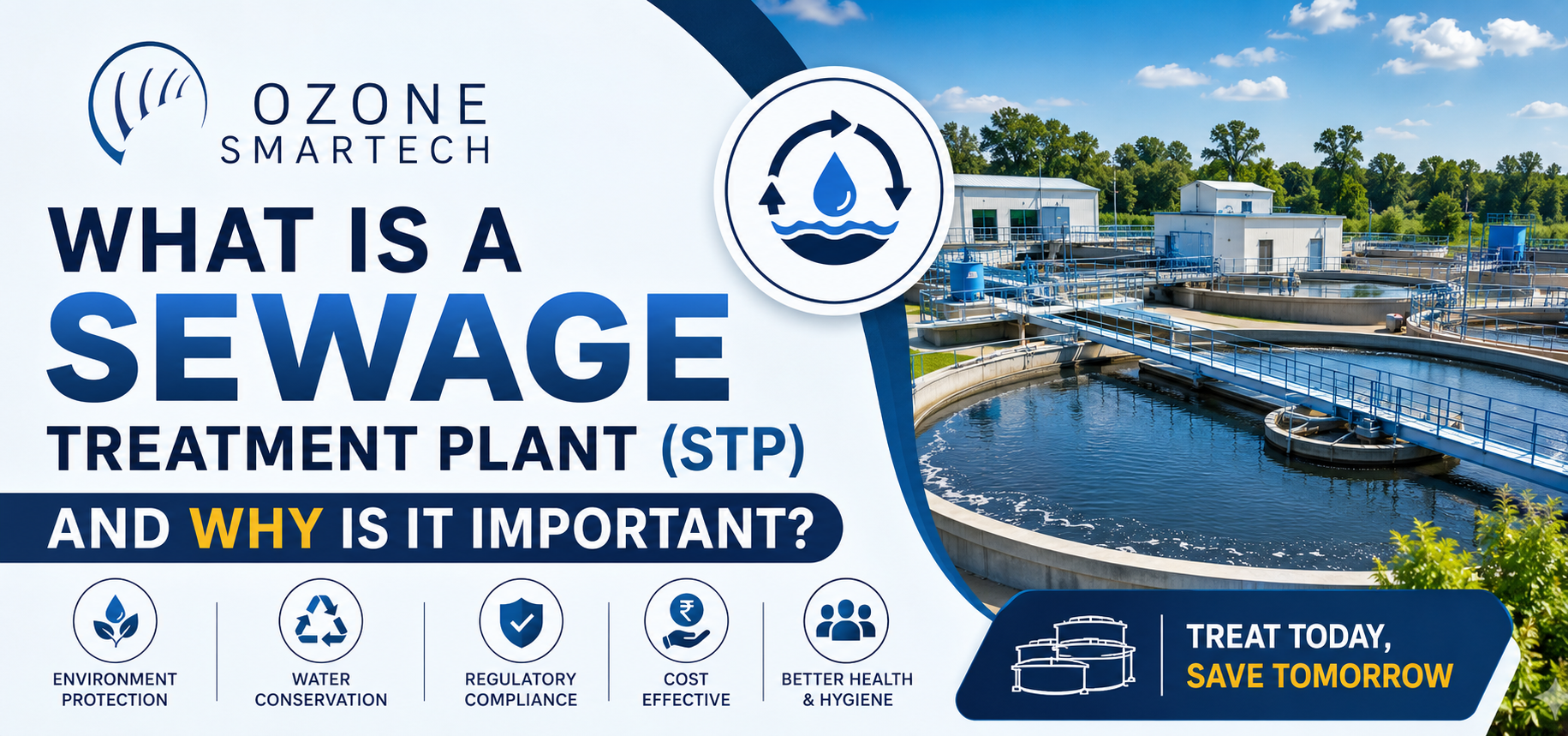
A Sewage Treatment Plant (STP) is a facility that treats domestic wastewater generated from residential buildings, commercial establishments, educational institutions, hospitals, hotels, and public infrastructure. Its primary purpose is to remove pollutants, suspended solids, harmful microorganisms, organic matter, and excess nutrients from sewage before releasing the treated water into the environment or reusing it for non-potable applications.
Modern STPs use a combination of physical, biological, and chemical treatment processes to achieve high-quality treated water.
How Does an STP Work?
A sewage treatment plant operates through multiple stages to ensure effective wastewater purification.
1. Preliminary Treatment
During the first stage, large solid materials such as plastic, paper, leaves, cloth, and debris are removed using screening systems. Sand, grit, and heavy particles are also separated to protect downstream equipment.
2. Primary Treatment
Wastewater is directed into sedimentation tanks where heavier solids settle at the bottom as sludge, while lighter materials like oils and grease float to the surface for removal.
3. Secondary (Biological) Treatment
Beneficial microorganisms break down dissolved organic matter present in the wastewater. This biological process significantly reduces pollutants and improves water quality.
4. Secondary Clarification
The biological sludge is separated from the treated water. A portion of the sludge is recycled back into the treatment process, while the remaining sludge is processed for disposal or further treatment.
5. Tertiary Treatment
Advanced filtration and disinfection processes such as UV treatment, chlorination, or ozone treatment remove remaining impurities and harmful microorganisms to produce high-quality treated water.
Why Is a Sewage Treatment Plant Important?
Protects the Environment
Untreated sewage contaminates rivers, lakes, groundwater, and soil. An STP removes harmful pollutants before wastewater is discharged, protecting ecosystems and aquatic life.
Conserves Water
Treated wastewater can be reused for gardening, landscaping, cooling towers, toilet flushing, construction activities, and industrial applications, reducing dependence on freshwater resources.
Supports Sustainable Development
Water scarcity is becoming a major concern across the world. Recycling wastewater through STPs helps organizations adopt sustainable water management practices.
Ensures Regulatory Compliance
Many environmental authorities require commercial and industrial establishments to treat wastewater before disposal. Installing an STP helps organizations comply with applicable pollution control regulations and environmental standards.
Improves Public Health
Proper sewage treatment eliminates disease-causing bacteria, viruses, and parasites that can contaminate drinking water sources and spread waterborne diseases.
Reduces Operating Costs
Reusing treated water reduces freshwater consumption and lowers utility bills over the long term, making STPs a cost-effective investment.
Key Components of an STP
A typical sewage treatment plant consists of:
- Screening Chamber
- Grit Removal Unit
- Equalization Tank
- Aeration Tank
- Clarifier
- Sludge Holding Tank
- Filter Press
- Pressure Sand Filter
- Activated Carbon Filter
- UV/Ozone Disinfection System
- Treated Water Storage Tank
Applications of Sewage Treatment Plants
STPs are widely used in:
- Residential Apartments
- Housing Societies
- Commercial Complexes
- Hotels & Resorts
- Hospitals
- Educational Institutions
- Shopping Malls
- Office Buildings
- Airports
- Railway Stations
- Industrial Campuses
- Government Buildings
Benefits of Installing an STP
- Reduces environmental pollution
- Recycles wastewater efficiently
- Saves freshwater resources
- Lowers operational costs
- Supports green building certifications
- Minimizes groundwater contamination
- Improves hygiene and sanitation
- Ensures environmental compliance
- Enhances corporate sustainability initiatives
- Increases property value for large developments
Factors to Consider Before Installing an STP
When selecting a sewage treatment plant, consider the following:
- Daily wastewater generation capacity
- Available installation space
- Required treatment quality
- Energy efficiency
- Ease of maintenance
- Automation and monitoring features
- Future expansion requirements
- Operating and maintenance costs
- Compliance with applicable regulations
Consulting experienced water treatment professionals helps ensure the system is properly designed for your specific needs.
Maintenance Tips for Long-Term Performance
Regular maintenance ensures consistent performance and extends the lifespan of the plant.
- Inspect pumps and motors regularly.
- Clean screens and filters frequently.
- Monitor pH and water quality parameters.
- Check aeration equipment for proper operation.
- Remove accumulated sludge on schedule.
- Calibrate sensors and control systems.
- Replace worn components promptly.
- Conduct periodic performance audits.
Preventive maintenance reduces downtime and improves treatment efficiency.
Why Choose Ozone Smartech?
At Ozone Smartech, we design and deliver advanced sewage treatment solutions tailored to the unique needs of residential, commercial, institutional, and industrial clients. Our systems are engineered for reliability, energy efficiency, and long-term performance, supported by expert installation, commissioning, and maintenance services.
Whether you require a compact STP for a residential complex or a large-capacity system for an industrial facility, our team provides customized solutions that help conserve water, improve operational efficiency, and support sustainable development.
Conclusion
A Sewage Treatment Plant (STP) is more than just a wastewater treatment system—it’s an essential investment in environmental protection, water conservation, and sustainable growth. By treating and reusing wastewater, organizations can reduce operating costs, comply with environmental standards, and contribute to a healthier future.
If you’re planning to install or upgrade an STP, partnering with an experienced water treatment company like Ozone Smartech ensures you receive a reliable, efficient, and future-ready solution tailored to your requirements.
Frequently Asked Questions
1. What is the purpose of an STP?
An STP treats domestic wastewater by removing pollutants, making the water safe for discharge or reuse.
2. Can treated sewage water be reused?
Yes. Treated water can be reused for landscaping, toilet flushing, cooling towers, construction, and other non-potable applications.
3. Who needs a Sewage Treatment Plant?
Residential societies, commercial buildings, hotels, hospitals, educational institutions, and many industrial facilities commonly require STPs.
4. How often should an STP be maintained?
Routine inspections should be carried out regularly, with preventive maintenance scheduled according to the plant’s size, usage, and manufacturer’s recommendations.
5. What are the benefits of installing an STP?
An STP helps conserve water, reduce pollution, lower operating costs, improve public health, and support environmental compliance.