




Industry Industry

Textile Industry

Textile Industry

Key Features

Water and Wastewater Treatment Solutions for the Textile Industry

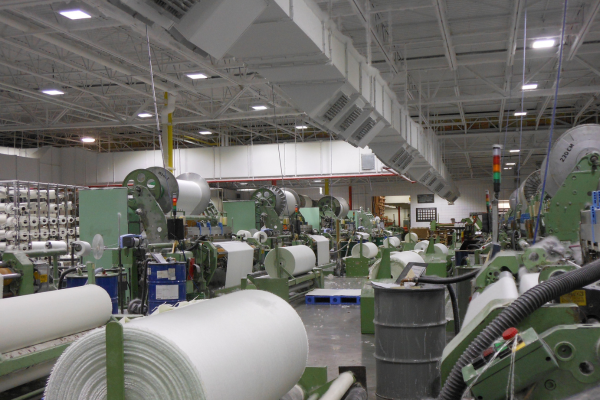
The textile industry requires large volumes of water for dyeing, bleaching, washing, printing, finishing, and fabric processing. These operations generate wastewater containing dyes, chemicals, suspended solids, salts, oils, detergents, and high levels of organic contamination.

Ozone Smartech provides customized water and wastewater treatment machines for textile manufacturing units. Our systems are designed to improve process-water quality, treat textile effluent, support water recycling, reduce chemical consumption, and help facilities maintain consistent production standards.

Applications

Dyeing Units

Fabric Washing Units

Yarn Dyeing Units

Textile Printing Units

Denim Processing Units

Textile Finishing Units

Bleaching and Scouring Units

Garment Manufacturing Units

Composite Textile Mills

Why Ozone Smartech?

Choosing the right textile industry solution is essential for ensuring hygiene, operational efficiency, and long-term reliability. At Ozone Smartech, we combine advanced ozone technology with engineering excellence to deliver high-performance cleaning systems trusted by homes, restaurants, food processors, and commercial establishments.
Industry-Specific System Design
Customized Treatment Technology
Complete Turnkey Execution
Advanced Ozone Technology
Focus on Water Recovery
Expert Installation & Training
Reliable After-Sales Support
Annual Maintenance Contracts (AMC)
Quick Service Response
Competitive Pricing
Nationwide Supply & Support
Experienced Technical Team

FAQs

Textile wastewater contains colour, dyes, salts, detergents, chemicals, suspended solids, and organic contaminants. Its composition can change frequently according to production activity, making specialized treatment necessary.
The appropriate system depends on the manufacturing process and wastewater characteristics. A textile facility may require an ETP, RO plant, water softener, ozone system, STP, recycling plant, or an integrated ZLD solution.
Ozone can oxidize many complex dye molecules and significantly reduce colour. Its effectiveness depends on the type of dye, wastewater composition, ozone dosage, contact time, and the overall treatment process.
Yes. After appropriate biological, chemical, filtration, oxidation, and membrane treatment, wastewater may be reused for selected applications such as washing, cooling, utility operations, gardening, or process use, subject to the required water-quality standards.
An RO plant can prepare high-quality process water by reducing dissolved salts and impurities. It can also be used in tertiary effluent treatment to recover water for reuse.
Hardness can react with dyes and chemicals, resulting in uneven shades, higher chemical consumption, fabric defects, and scaling in machinery. Soft water supports consistent processing and better product quality.
Zero Liquid Discharge is a wastewater-management approach in which water is recovered for reuse and the remaining concentrated waste is converted into solid or semi-solid form for suitable handling.
No. Treatment requirements depend on the type of textile process, production capacity, dyes and chemicals used, wastewater volume, inlet characteristics, discharge requirements, and water-reuse target.
Yes. Existing plants can be evaluated and upgraded through improved aeration, chemical dosing, filtration, ozone treatment, automation, membrane systems, sludge management, or capacity enhancement.
Capacity is generally determined using daily wastewater generation, peak flow, production shifts, future expansion, process variation, and required retention time.
Poultry

Categories

Archives

Cart
  • Your cart is empty Browse Shop
    Select the fields to be shown. Others will be hidden. Drag and drop to rearrange the order.
    • Image
    • SKU
    • Rating
    • Price
    • Stock
    • Availability
    • Add to cart
    • Description
    • Content
    • Weight
    • Dimensions
    • Additional information
    Click outside to hide the comparison bar
    Compare