




Industry Industry

Poultry

Poultry

Key Features

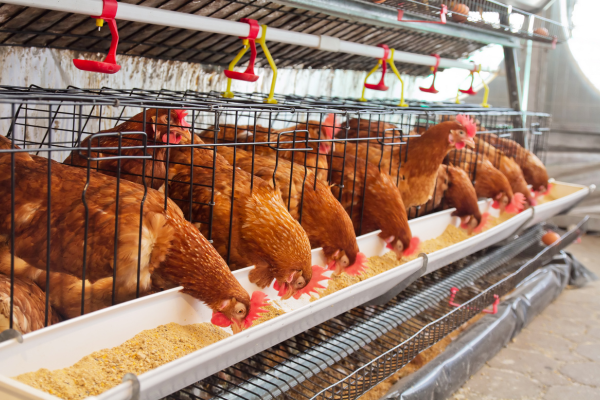
Ozone Smartech provides advanced ozone-based solutions for the poultry industry to support cleaner environments, improved water sanitation, effective odour control, and better biosecurity practices. Ozone is a powerful oxidizing agent that can be generated on-site and applied through air or water treatment systems, depending on the operational requirement.

Our poultry ozone machines are designed for applications such as drinking-water treatment, shed disinfection support, hatchery sanitation, odour reduction, surface washing, wastewater treatment, and cold-storage hygiene. Each system is selected according to the facility size, water quality, contamination load, operating conditions, and required ozone output.

Ozone treatment should be implemented as part of a properly designed sanitation and biosecurity programme. Our technical team evaluates the application and recommends a suitable ozone generator, dosing system, contact arrangement, monitoring equipment, and safety controls.

Applications

Poultry Drinking-Water Treatment

Poultry Processing Units

Poultry Wastewater Treatment

Poultry Shed Air Treatment

Feed Storage and Grain Areas

Hatchery Sanitation

Cold Rooms and Refrigerated Storage

Why Ozone Smartech?

Choosing the right poultry cleaning solution is essential for ensuring hygiene, operational efficiency, and long-term reliability. At Ozone Smartech, we combine advanced ozone technology with engineering excellence to deliver high-performance cleaning systems trusted by homes, restaurants, food processors, and commercial establishments.

Application-Specific System Design
On-Site Ozone Generation
Air and Water Treatment Solutions
Customized Capacity
Automation and Monitoring
Expert Installation & Training
Reliable After-Sales Support
Focus on Safety
Quick Service Response
Competitive Pricing
Nationwide Supply & Support
Experienced Technical Team

FAQs

Ozone may be used for drinking-water treatment, water-tank sanitation, pipeline-treatment support, odour control, empty-shed sanitation, hatchery hygiene, cold-room treatment, surface-washing applications, and wastewater polishing.
Direct ozone treatment in occupied poultry sheds requires specialist design and strict exposure control. High ozone concentrations can be harmful to birds and workers. Many sanitation applications are therefore performed during unoccupied periods, controlled cleaning cycles, or through specifically engineered low-exposure systems.
Ozonated water can be used in poultry-water treatment when the system is properly designed and the residual ozone level is controlled. Water quality, ozone dose, contact time, oxidation demand, and final residual must be evaluated before use.
Ozone can oxidize several odour-causing compounds and may help reduce odours from litter, manure, wastewater, and enclosed areas. Performance depends on the source of odour, ventilation, humidity, ozone concentration, and treatment duration.
Not necessarily. Ozone is generally used as part of a broader sanitation and biosecurity programme. Cleaning, removal of organic matter, approved disinfectants, ventilation, waste management, and farm-management practices may still be required.
Ozone treatment may support the reduction and control of biofilm in storage tanks and water-distribution systems. Existing heavy biofilm may require mechanical or chemical cleaning before routine ozone treatment becomes effective.
Yes, ozone may be used in controlled hatchery sanitation processes for rooms, equipment, trays, trolleys, water systems, and air-treatment cycles. However, ozone exposure must be carefully controlled around eggs, chicks, workers, and sensitive equipment.
Ozonated water may be integrated into selected washing, sanitation, process-water, cold-room, equipment-cleaning, and wastewater-treatment applications. The system must comply with applicable food-safety and local regulatory requirements.
Routine maintenance may include cleaning air filters, checking oxygen supply, inspecting tubing and injectors, cleaning diffusers, verifying ozone output, checking cooling systems, calibrating sensors, and replacing consumable components according to the operating schedule.
Ozone can be used as a pre-treatment or polishing process to reduce odour, colour, microbial load, and selected organic contaminants. It is usually integrated with physical, biological, or chemical wastewater-treatment systems rather than used as the only treatment stage.

Categories

Archives

Cart
  • Your cart is empty Browse Shop
    Select the fields to be shown. Others will be hidden. Drag and drop to rearrange the order.
    • Image
    • SKU
    • Rating
    • Price
    • Stock
    • Availability
    • Add to cart
    • Description
    • Content
    • Weight
    • Dimensions
    • Additional information
    Click outside to hide the comparison bar
    Compare